TCT (Tungsten Carbide Tipped) circular saw blades remain the dominant cutting tool for modern wood‑processing facilities. Compared with conventional high‑speed‑steel blades, TCT blades deliver far longer service life and consistent cutting quality across solid softwood, hardwood, plywood, particle board and MDF.
Even so, many buyers make blade selection decisions based only on price or diameter. Poorly matched TCT saw blades create frequent production headaches: burnt workpiece edges, heavy tear‑out, machine vibration and premature tooth damage. These issues push up scrap rates, trigger unplanned downtime and raise your overall tool replacement costs.
This practical buying guide walks you through all critical selection criteria. You will understand how to match blade specifications to your actual materials, machinery and production goals, plus actionable advice for factory procurement teams and wholesale importers.
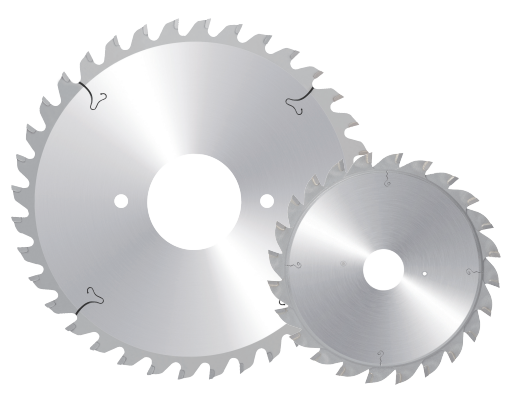
Tooth Count: Balance Cutting Speed and Surface Finish
Tooth count is one of the most fundamental parameters. There is no universal “best” tooth number for every wood‑cutting scenario.
- 24‑40T (Lower tooth count): Optimized for fast rip‑cut along wood grain. Material removal speed is high, yet the finished surface stays relatively rough. These blades fit rough‑processing workflows where secondary sanding will be performed afterwards.
- 48‑80T (Higher tooth count): Produce smooth, fine‑finish cuts. They perform well for cross‑cutting and wood‑based panels. However, aggressive feeding speed will build excessive friction heat, overheat carbide tips and burn your workpieces.
A common mistake is over‑specifying tooth count. High‑tooth fine‑cut blades will slow down your whole production line if you only require rough cutting results. Always align tooth quantity with your real‑world processing objectives.
Tooth Geometry Match for Your Cutting Tasks
Tooth geometry directly defines what jobs a TCT saw blade can handle efficiently. Two main tooth types are widely used in wood‑processing workshops.
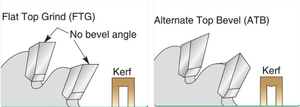
- ATB (Alternate Top Bevel): The most versatile general‑purpose option. Alternating beveled teeth deliver clean slicing effects for both rip‑cut and cross‑cut operations. Most multi‑purpose woodworking workshops rely heavily on ATB‑style TCT blades.
- FTG (Flat Top Grind): Designed for rip‑cut only. Flat‑shaped teeth remove wood chips at high speed, but they cannot generate satisfactory results for cross‑cutting work.
Before placing orders, clarify whether your primary task is ripping stock to width or cross‑cutting to length, then select the corresponding tooth geometry.
Steel Substrate and Carbide Tip Quality
Cutting performance does not come from marketing labels. It depends on the quality of two core blade components.
Stress‑Relieved Alloy Steel Body
Premium‑grade TCT saw blades adopt stress‑relieved alloy steel. Under high‑speed rotation and repeated thermal cycles generated by cutting friction, the blade disc keeps flat and dimensionally stable. Inferior low‑cost steel tends to deform after short‑time operation, leading to wavy cuts, strong vibration and early carbide‑tip failure. Visually, high‑quality substrates feature uniform surface finishing without rough machining burrs.
Tungsten Carbide Tips
Carbide tip grade determines how long cutting edges remain sharp. High‑quality carbide offers outstanding wear resistance and holds precise geometry over thousands of cuts. Economy‑grade carbide tips turn dull quickly, increasing scrap rates and forcing frequent blade replacement cycles.
Mechanical Compatibility With Your Saw Machine
Even top‑quality TCT saw blades cannot perform well without proper mechanical matching with your equipment. Double‑check two key dimensions before purchasing:
- Outer diameter of the saw blade
- Arbor hole size
A mismatched arbor hole fails to maintain concentric rotation during operation. Besides poor cutting quality, it creates potential safety hazards. Always cross‑reference your saw machine manual for supported blade dimension ranges.
Material‑Specific Blade Recommendations
- Softwood: 24‑40T ATB blades for high‑speed rough‑cut processing.
- Hardwood: 40‑60T ATB blades offer balanced cutting speed and finished‑surface quality.
- Wood‑based panels (plywood, particle board, MDF): Choose higher tooth counts to minimise edge splintering and veneer tear‑out. For mass‑volume abrasive panel processing, you may also evaluate PCD tipped saw blades as a long‑term cost‑saving alternative.
Quick Procurement Checklist for Factory Buyers
Run through this checklist before bulk purchasing TCT saw blades:
- Confirm your main workpiece material: solid wood or engineered wood panels.
- Identify your primary cutting mode: rip‑cut, cross‑cut or mixed‑use.
- Verify blade diameter and arbor hole fit your existing saw machinery.
- Prioritise stress‑relieved steel body and high‑grade carbide tips, avoid chasing low unit price blindly.
- For large‑volume orders, complete sample testing under real‑production conditions.
Sourcing Tips for Wholesale Distributors
If you source TCT saw blades for resale to local wood‑processing workshops:
- Keep multiple tooth‑count options in stock: low‑tooth for rough cutting, high‑tooth for furniture‑grade fine cutting.
- Pay close attention to carbide tip grade and brazing quality. Stable raw material quality helps reduce end‑user complaints.
- Prepare basic technical guidance so your customers can select blades according to their processing materials.
- Ask your manufacturer about custom sizes and private‑label OEM solutions if you plan to build your own tool brand.
Frequently Asked Questions
Q: Can one TCT saw blade work for both solid wood and MDF cutting?
A: General‑purpose ATB blades support both materials. Still, continuous heavy‑volume MDF processing will accelerate carbide wear. Factories with large panel output should consider dedicated blades for panel cutting.
Q: Is higher tooth count always better for wood cutting?
A: No. Too many teeth will slow cutting speed and accumulate excessive heat. Match tooth count to your processing requirements instead of blindly pursuing higher tooth numbers.
Q: What damage will a warped blade body cause?
A: Deformed steel substrate results in wavy cutting edges, heavy machine vibration, uneven stress on carbide tips and higher risk of tooth loss during operation.
Final Conclusion
Selecting the right TCT saw blade for wood‑cutting requires you to evaluate tooth count, tooth geometry, substrate and carbide quality, plus mechanical compatibility with your saw equipment. Do not make purchasing decisions purely based on unit price. For workshop operators and wholesale buyers, real‑production sample testing always beats marketing descriptions.
If you are a wood‑processing factory or hardware distributor looking for wholesale TCT circular saw blades, reach out for detailed specifications and sample support.