Introduction
A diamond core drill bit is the only practical tool for cutting clean, large-diameter holes through concrete, brick, stone and reinforced masonry — for pipe and cable penetrations, HVAC openings, anchor holes and sampling. But “diamond bit” is not one product. Bits made for brick will glaze and stop cutting in reinforced concrete; bits made for hard concrete will tear through soft sandstone so aggressively that the segments overheat and the core binds.
For buyers and dealers, the cost of choosing wrong is not just a ruined bit: a bit that fails mid-hole in a wall means lost rig time, damaged concrete and a crew standing idle. This guide explains how diamond core bits work, the four structural types on the market, and the selection rules that match a bit to material, diameter and drilling method.
How a Diamond Core Bit Cuts
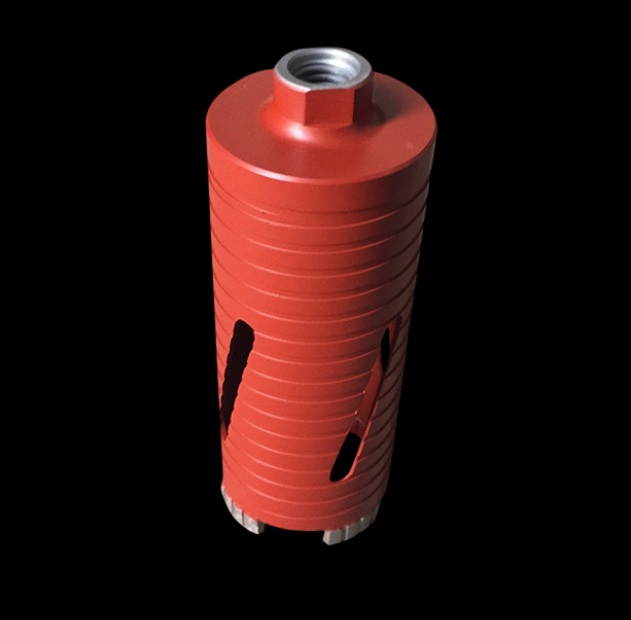
A diamond core bit is a steel tube with diamond-impregnated segments (or an electroplated diamond layer) around its cutting edge. It cuts an annular groove, leaving a solid core of material inside the tube instead of grinding the entire hole volume into dust. That is why a 100 mm core bit drills a hole in a fraction of the time a 100 mm solid drill would need — and why it runs far cooler.
The actual cutting is done by industrial diamonds held in a metal bond matrix. As the bit wears, the bond erodes and exposes fresh diamond crystals. This “self-sharpening” balance is the heart of bit quality:
- Bond too hard for the material → diamonds wear flat, the surface glazes, the bit stops cutting.
- Bond too soft → segments erode before the diamonds do their work; bit life collapses.
Correctly matched to the material, a sintered diamond bit maintains a sharp, self-renewing edge for its entire working life.
The Four Types of Diamond Core Drill Bits
| Type | Structure | Best For | Relative Life |
|---|---|---|---|
| Sintered (bonded) segments | Diamond segments sintered onto the steel tube | Concrete, reinforced concrete, stone, long-life professional use | ★★★★★ |
| Laser-welded segments | Segments attached by laser weld — strongest joint | Dry drilling, high-power rigs, deep holes | ★★★★★ |
| Brazed / silver-soldered | Segments attached by brazing | General purpose, wet drilling, moderate use | ★★★ |
| Electroplated | Single layer of diamond plated onto the tube | Soft stone, tile, short-run precision work | ★★ |
For wholesale buyers, the practical distinction matters most on the jobsite: laser-welded and sintered bits tolerate the heat of dry drilling and the abuse of hitting rebar, while brazed bits are the value option for controlled, wet, general-purpose work.
Selection Rule 1: Match the Bond to the Material
| Material | Bond Hardness | Segments | Notes |
|---|---|---|---|
| Reinforced concrete | Soft-bond, high diamond concentration | Turbo or segmented | Soft bond keeps cutting through hard aggregate; segments clear rebar strikes |
| Hard concrete / high-strength mixes | Soft bond | Segmented, water-cooled | Prevents glazing on dense aggregate |
| Brick, block, soft masonry | Hard bond | Segmented or turbo | Hard bond resists the abrasion that erodes soft bonds |
| Sandstone / abrasive stone | Hard bond | Segmented | Abrasive material self-sharpens even hard bonds |
| Marble, granite | Medium-hard bond | Continuous rim preferred | Continuous rim minimizes chipping on finished stone |
| Tile / porcelain | Hard bond, thin wall | Continuous rim, electroplated or sintered | Clean exit holes, no chip-out |
The universal rule: hard material → soft bond; abrasive/soft material → hard bond.
Selection Rule 2: Wet Drilling vs. Dry Drilling
- Wet drilling (water-fed): the professional default for diameter ≥100 mm. Water cools the segments, flushes the cut clean, suppresses dust, and can multiply bit life 3–5×. Required for deep holes and most reinforced concrete.
- Dry drilling: only for smaller diameters (typically ≤110 mm), shallower holes, and bits explicitly rated for dry use (usually laser-welded or turbo-segmented). Expect shorter life, slower progress and more operator skill required.
If your customers drill both ways, stock dry-rated bits for flexibility — a dry-rated bit also runs wet, but a wet-only brazed bit will shed segments if run dry.
Selection Rule 3: Diameter, Wall and Length
- Standard range. Common construction diameters run from Ø18 mm (anchor holes) to Ø350 mm (service penetrations); most stock programs cluster between Ø25 and Ø200 mm. Confirm the supplier’s full range with a single consistent thread/connection standard (usually 1-1/4″ UNC or M22).
- Wall thickness. Thinner walls cut faster and remove less material, but are less rigid and less tolerant of rebar strikes. Standard wall for construction bits balances the two.
- Drilling length. Standard barrel lengths (around 450 mm total) cover most wall penetrations. Deep holes need extension barrels matched to the same bit system.
- Turbo vs. regular segments. Turbo segments have angled ribs that increase cutting speed 20–30% — a meaningful productivity gain on bid-priced drilling work.
Selection Rule 4: What Quality Looks Like — A Buyer’s QC Checklist
When evaluating a supplier’s core bits, check:
- Segment alignment. Run your finger around the segment tops: they should sit in a single flat plane. Runout beyond ~0.1 mm means wobble, oval holes and rapid one-sided wear.
- Concentricity. Mount the bit (or roll it on a flat surface): the tube and segments should rotate true around the axis. Bent tubes drill over-sized, bell-mouthed holes.
- Segment bond consistency. Segments should look uniform in color and density; patchy, dull-copper-colored segments indicate poor sintering and will shed diamonds.
- Weld integrity. On laser-welded bits, the weld seam should be continuous and even around each segment — no gaps, no burned steel.
- Batch test. Drill a standardized number of holes in a known material (e.g., 20 holes in C30 concrete) and record both penetration rate and segment wear. Good manufacturers publish these numbers; great ones welcome the test.
Common Questions from Buyers
Q: What RPM should a diamond core bit run at?
Cutting speed should stay in the 3–8 m/s range. As a rule of thumb, a Ø50 mm bit runs around 1,000–1,500 RPM, a Ø100 mm bit around 500–800 RPM, and a Ø200 mm bit around 250–400 RPM. Faster is not better — overheating glazes the segments.
Q: The bit stopped cutting. Is it worn out?
Usually it’s glazed, not worn. Dress the bit by drilling a few centimeters into an abrasive block (or soft brick) to wear away the blunt bond layer and re-expose diamonds. If segment height remains but it still won’t cut after dressing, the bond is too hard for your material.
Q: Can I drill through rebar?
Laser-welded and quality sintered bits with high diamond concentration will cut rebar, slowly, with reduced pressure and good water flow. Brazed bits frequently lose segments on rebar. If rebar strikes are routine in your market, stock accordingly.
Q: How many holes should a bit drill?
Depends entirely on material, diameter and technique. As a benchmark, a quality sintered bit in moderate concrete should deliver 30–100+ penetrations before segments are consumed. Track holes-per-bit by batch — it is the single most honest KPI in core drilling.
How Badatools Supplies Diamond Core Bits
Badatools distributes sintered diamond core bits covering Ø18–350 mm with 450 mm barrel length, for concrete, wall, marble and stone drilling work, backed by:
- Multiple certified manufacturers with automated production and standardized quality inspection on hardness, balance and cutting precision
- OEM / custom specifications for your local market’s common diameters and connection standards
- Stocked standard sizes for fast shipment, supporting small mixed trial orders through full-container wholesale
- Complete dealer support: authorization certificates, inspection reports, HD product photos and production videos
Contact us for a core bit program matched to your market’s drilling applications.